Right 2 Dream Too at Burnside & 4th, PDX (2011-2017)
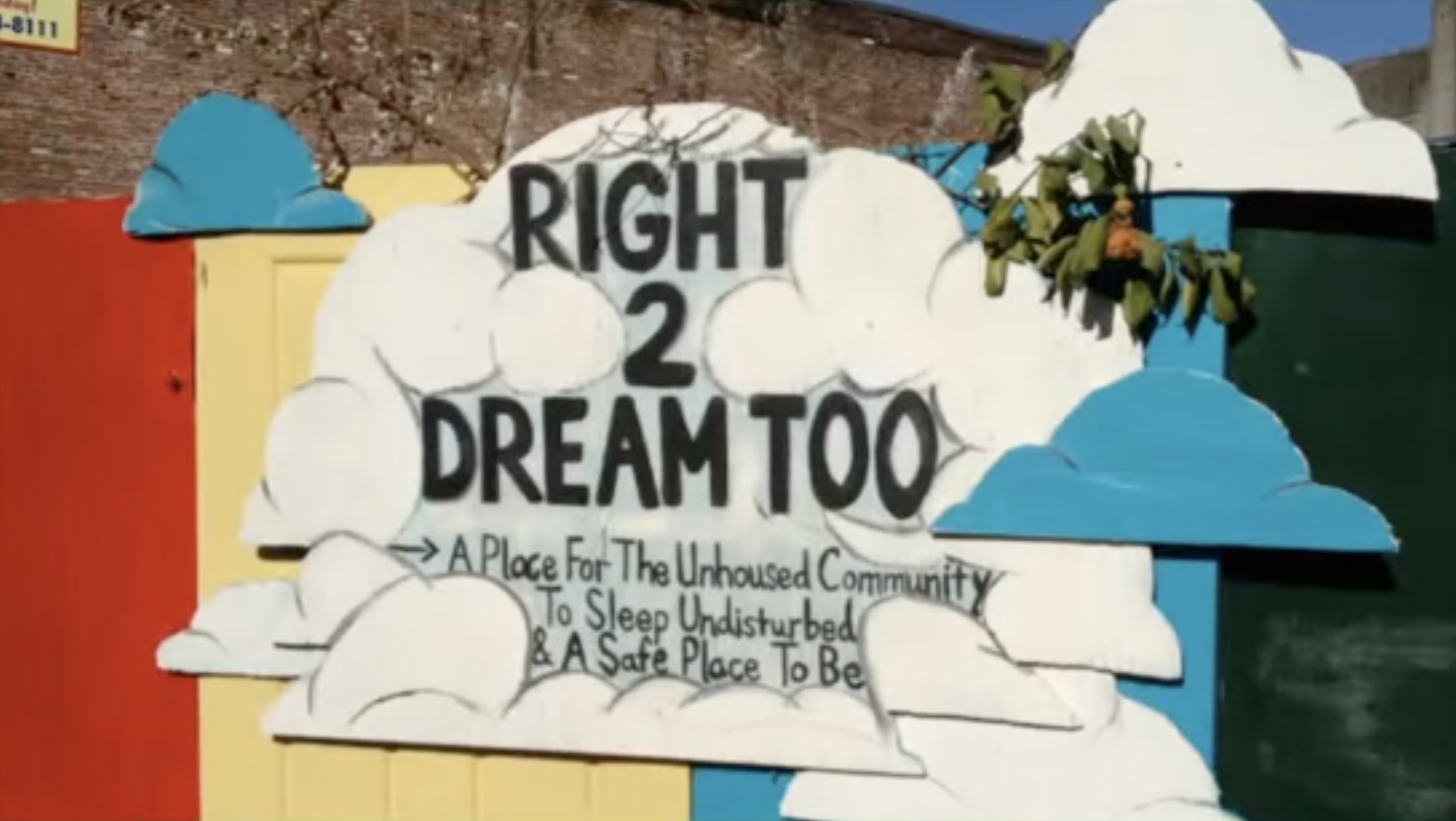
This page archives four resources: (1) a link to a documentary about the camp made by the camp and friends, (2) an OPB article describing the institution during its years at Burnside/4th, (3) extracts from an article in The Oregonian expressing hope that a new boutique hotel, The Hoxton, would improve the surrounding neighborhood after the eviction of the camp across 4th ave, (4) historical street view photos of the site from 2009 to present.
In 2017, Right2DreamToo jumped the Willamette river and (as of 2026) persists in the Lloyd district. at this page
Right 2 Dream Too’s video self-portrait (2015)
We found this wonderful self-documentary on the collective's blog, which is itself incredibly rich. The most recent post dates to last month, and clearly requires inclusion here:
“We are once again facing financial hardships, and with the cuts to funding federally our foundation grant funding is drying up. In response to that we are moving to a community-funded, sustainer model. If you could support us monthly, at any amount you feel comfortable with, we would be infinately greatful.”
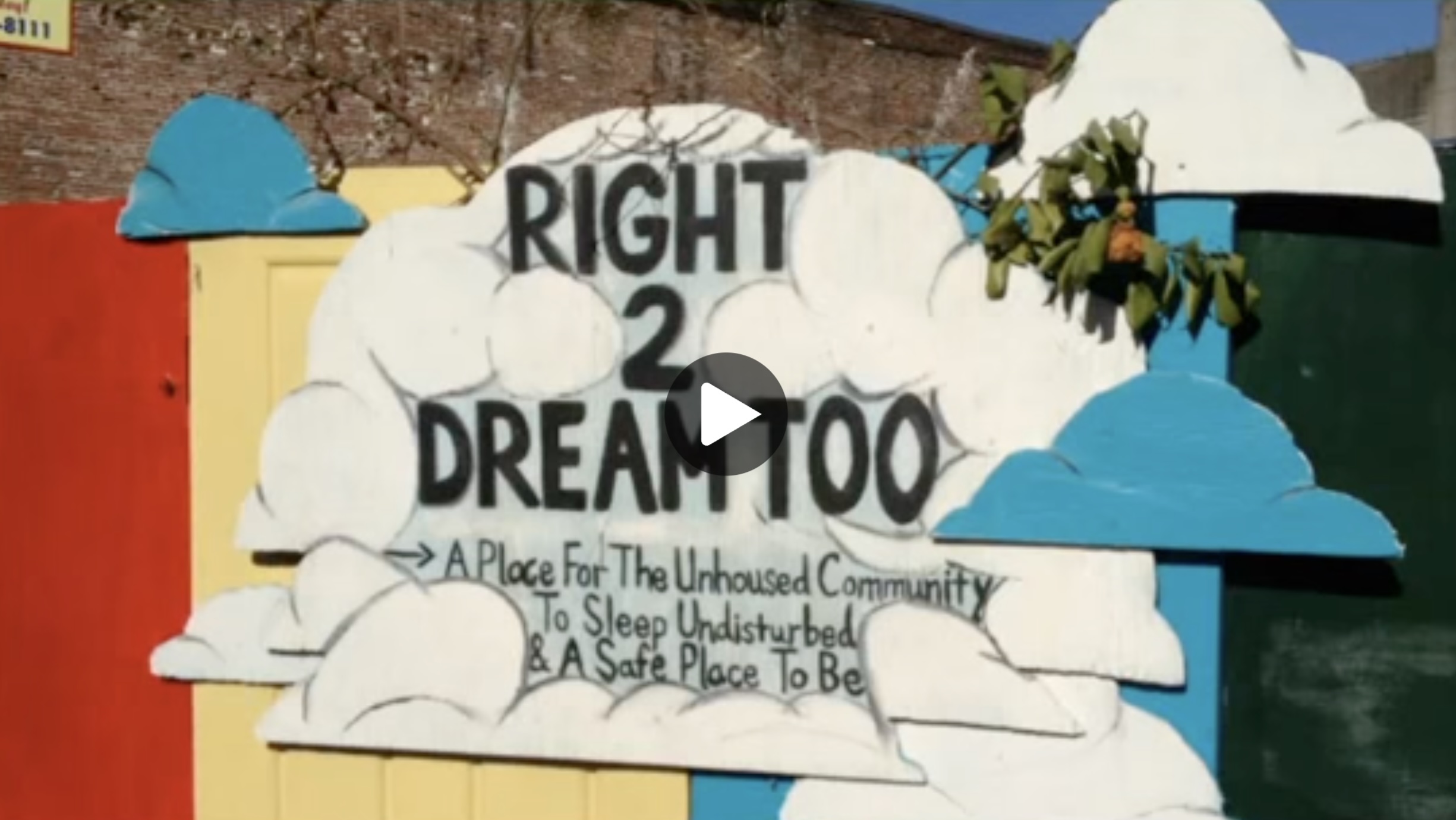
Right 2 Dream Too Homeless Camp Looks To Find New Home (2016)
Amelia Templeton (OPB)
Feb. 24, 2016 7:59 a.m., Updated: Feb. 24, 2016 2:14 p.m.
Note that this article, cited by the R2DToo entry on Wikipedia, doesn’t seem to be online any more at opb.org. The text below was preserved by the WayBackMachine.
The Portland city council will vote today on a proposal to move the Right 2 Dream Too homeless camp to a city-owned lot.
The new site, near the new Tilikum Crossing Bridge, could resolve years of uncertainty over the camp’s future.
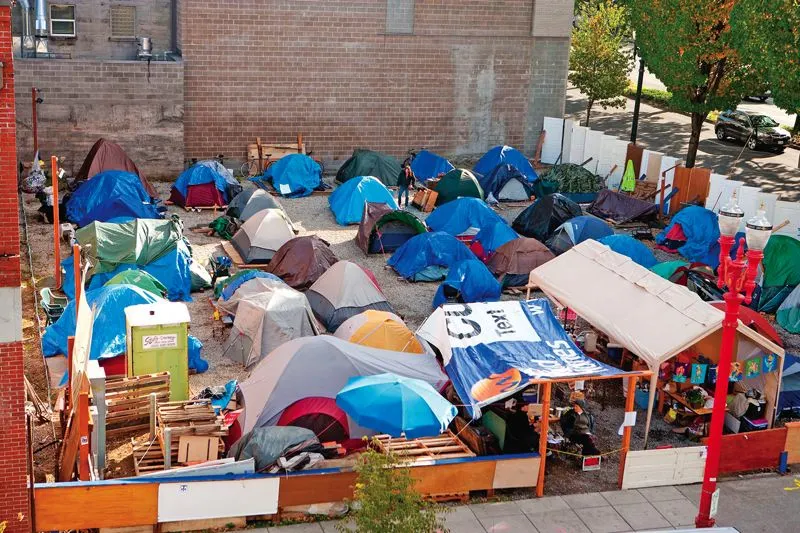
Currently, the Right 2 Dream Too camp sits next to the red-and-gold gate at the entrance to Portland’s Chinatown. Five years ago, an adult bookstore owner who had feuded with the city invited Right 2 Dream Too to pitch their tents on his property.
The homeless camp is sheltered by a wall made of painted wooden doors. Everyone who enters has to check in at the security desk.
“Before we let people in, we have them read this code of conduct,” said Ibrahim Mubarak, a homeless activist who founded Right 2 Dream Too. “Some of the most important rules are we are a weapon free zone; we are a drug free zone. And those are the most important things. And respecting each other.”
Those rules are similar to what most homeless shelters in Portland require. But in many other ways, Right To Dream Too is atypical. Inside, the camp looks like an adult version of a childhood fort.
The floors are built out of pallets. The walls and roof are built from blue tarps and old lumber. There are three main communal sleeping areas: one for men, one for women and one for couples.
A few dozen men are stretched out on the floor, snoring quietly. Nearby Mubarak points out a stack of fresh sleeping bags.
“This here is our biggest expense. Keeping over 200 sleeping bags clean. We wash them two to three times a week,” Mubarak says.
The camp smells a little like mildew. But it’s also tidy, organized and dry. And unlike Portland’s other shelters, which don’t allow people to stay during the day, Right To Dream Too allows people to show up any time and sleep for up to twelve hours.
Mike Summers says he feels safe here.
“I’m not trying to sleep with one eye open and one eye closed, making sure that I’m not assaulted and my girlfriend’s not assaulted,” Summers says.
Summers says he quit his job to take care of his mother and has been unemployed and homeless since she died.
“I think there’s more of these that need to be built. It’s not a long term solution; it’s a temporary thing until the city gets more housing built up,” he says.
Here’s where Right 2 Dream Too gets complicated. In addition to the short-term visitors who stay for up to 12 hours, there’s also a group of longer term residents, called members. The members essentially run the camp.
They keep it clean and do at least an hour of chores a week.
In exchange, they get to sleep in their own tents in the back. And have access to a small kitchen.
Inside, Marty Monahan is cooking his breakfast in a George Foreman Grill.
“I’m making yummy hashbrowns. They’re to die for. That’s Crisco,” he says.
Monahan does not fit the stereotype of a homeless person. He is clean-shaven, cleanly dressed and handsome. He works in an Italian restaurant. But he says the wage he earns isn’t enough.
“I’m making $12. And even at $12 an hour — that’s not cutting it,” Monahan says. Even with his income, he’s struggled to get off the street. He’s been living at Right 2 Dream Too for four years. He hasn’t found a place that will rent to him, and he hasn’t qualified for subsidized housing.
“I tried to get housing, and a waiting list would be four to five years for someone like me,” he says.
Monahan admits that spending time indoors is hard for him now.
“After four years, you start getting claustrophobia when you go inside. So I’ll go over to my friend’s. You have to have the windows open, and the doors open. Otherwise you can’t breathe,” he says.
But Monahan does have an exit strategy. He’s bought an RV, and he’s paying to have it fixed up. Long-term residents like Monahan are part of what makes Right 2 Dream Too controversial.
Some argue that the camp is really short-term housing, and not just a rest area. Critics say it’s just not an appropriate place to have people living for months or even years at a time. Mubarak, the camp’s founder, stresses that his goal is to have the members find permanent housing.
He points out an open space in the middle of the camp and says several tents were recently taken down: “Four people got housed last month. And that’s good. That brings our total to 295 people.”
The camp’s members have mixed feelings about the proposed move across the river. On the one hand, they’ll be farther away from the social services downtown. On the other hand, the new camp will have showers, bathrooms and a laundry area.
That, they said, will be a blessing.
First look: Hoxton Hotel to open in Portland’s Old Town Chinatown (2018)
Elliot Njus (The Oregonian)
Nov. 02, 2018, 9:00 a.m., Updated: Nov. 02, 2018, 5:07 p.m.
Excerpts taken from The Oregonian/OregonLive.
"We're not budget," said Sharan Pasricha, founder and chief executive of The Hoxton's London-based parent company Ennismore, "but it's really about being accessible."
The hotel represents a significant construction project in Old Town Chinatown, a neighborhood that has long played host to an outsized share of social service agencies and homeless shelters. It's seen little private development in recent years, even as downtown and the Pearl District have boomed.
It's also a major turnaround for the Grove Hotel, a neighborhood eyesore that was acquired by Portland's housing authority in 2007. The housing authority briefly placed chronically homeless offenders released from jail there before selling the building to the Portland Development Commission in 2010.
The commission, the city's development arm now known as Prosper Portland, spent $2.5 million to acquire the blighted building and make repairs. It sold the building for $630,000 -- which the agency said was its appraised value -- in 2014 to a development group led by Bob Naito, which launched the hotel project.
The developers sued the city in 2017 to evict Right 2 Dream Too, the self-governed homeless camp that took up residence in a vacant lot next door. Months later, the camp moved to a site in the Rose Quarter.
[...]
That Right 2 Dream Too site now might be headed for redevelopment. Prosper Portland says it expects to choose a developer for the now-vacant spot by June.
Pasricha said the hotel chain has made a practice of opening in neighborhoods about to take off. He said he feels Old Town Chinatown is changing for the better.
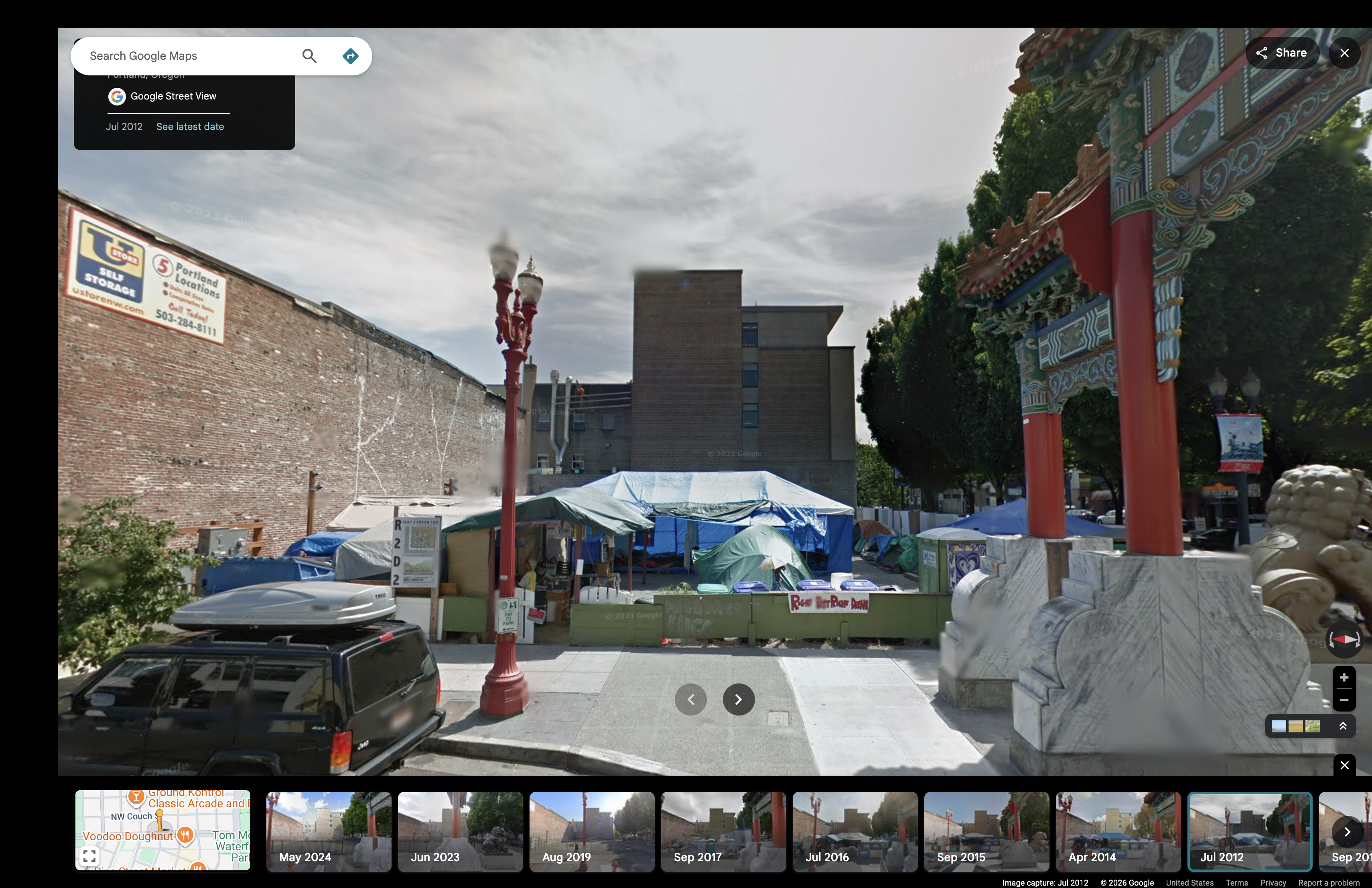
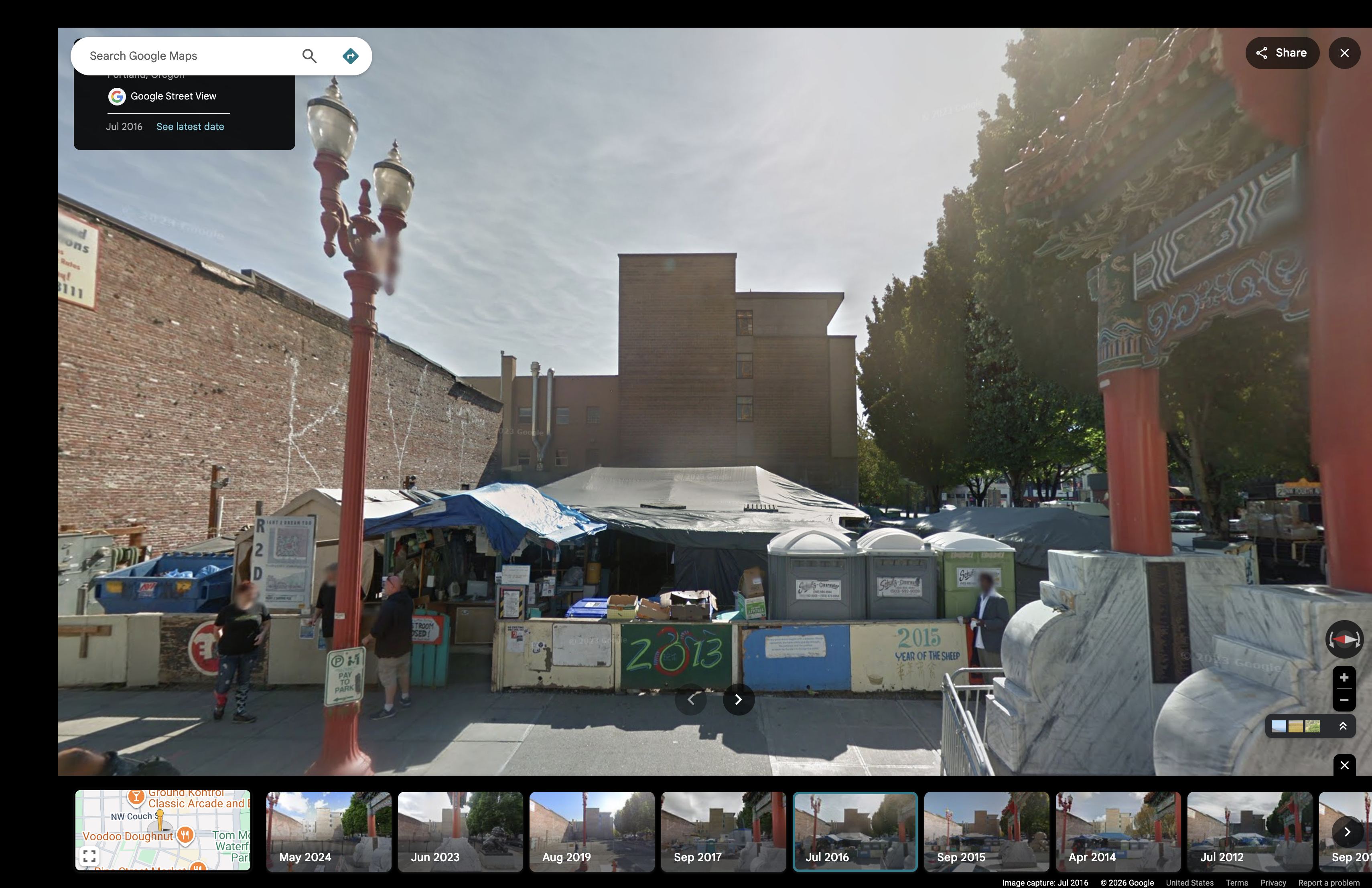
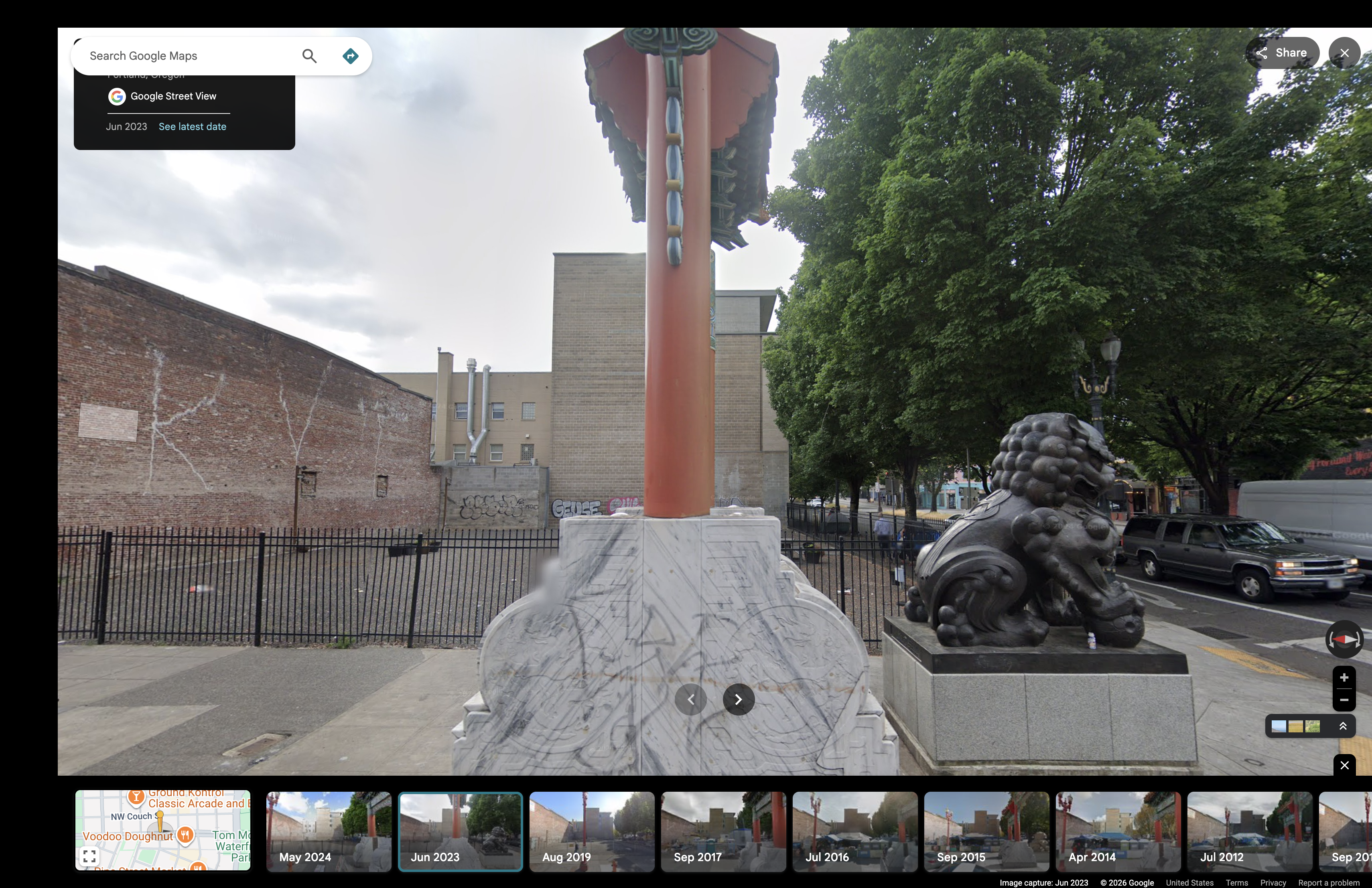
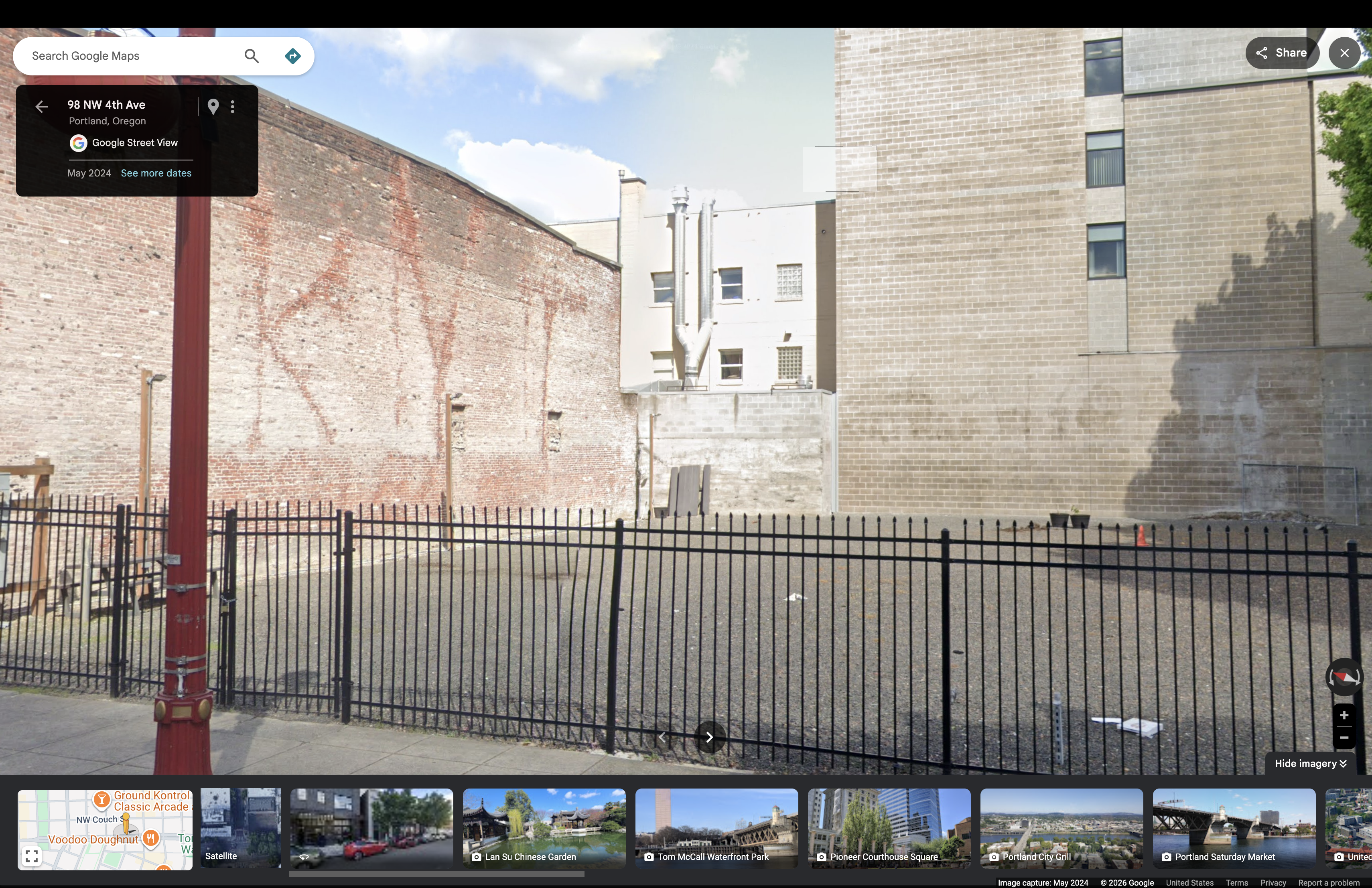
Street View History, 2009–present
2009
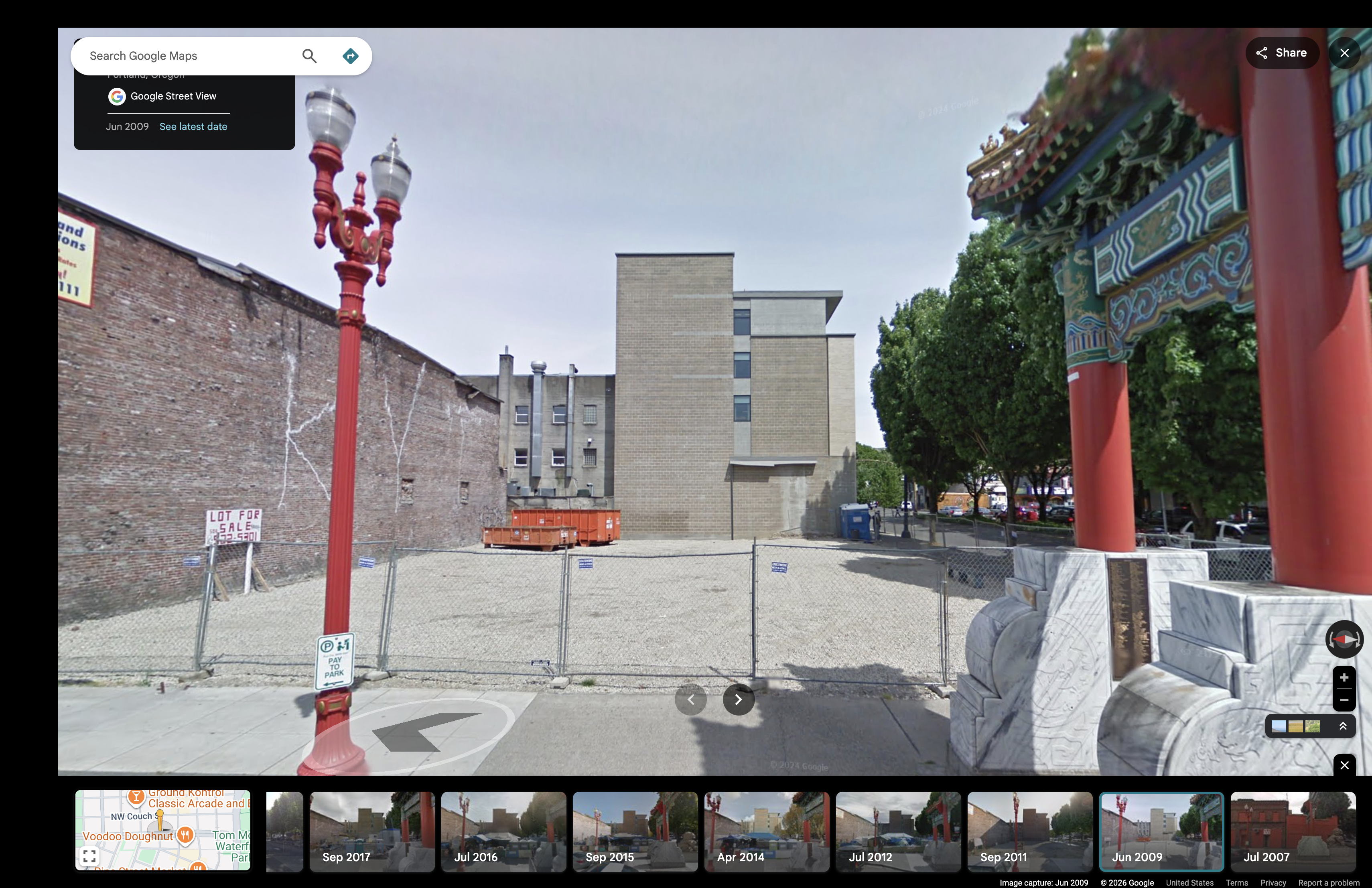
2012
2016
2023
Back to nothing.
Latest
Still nothing.
Companies like Ennismore (owner of The Hoxton, see above) prioritized their property value over the peace and stability their neighbors had found. Chasing out institutions like Right 2 Dream Too didn’t do property values any good. In 2024, the REI flagship, a staple of downtown Portland business, was shuttered.
House of Louie, two blocks away remains fallow since Sisters of the Road’s purchase fell through in 2024.
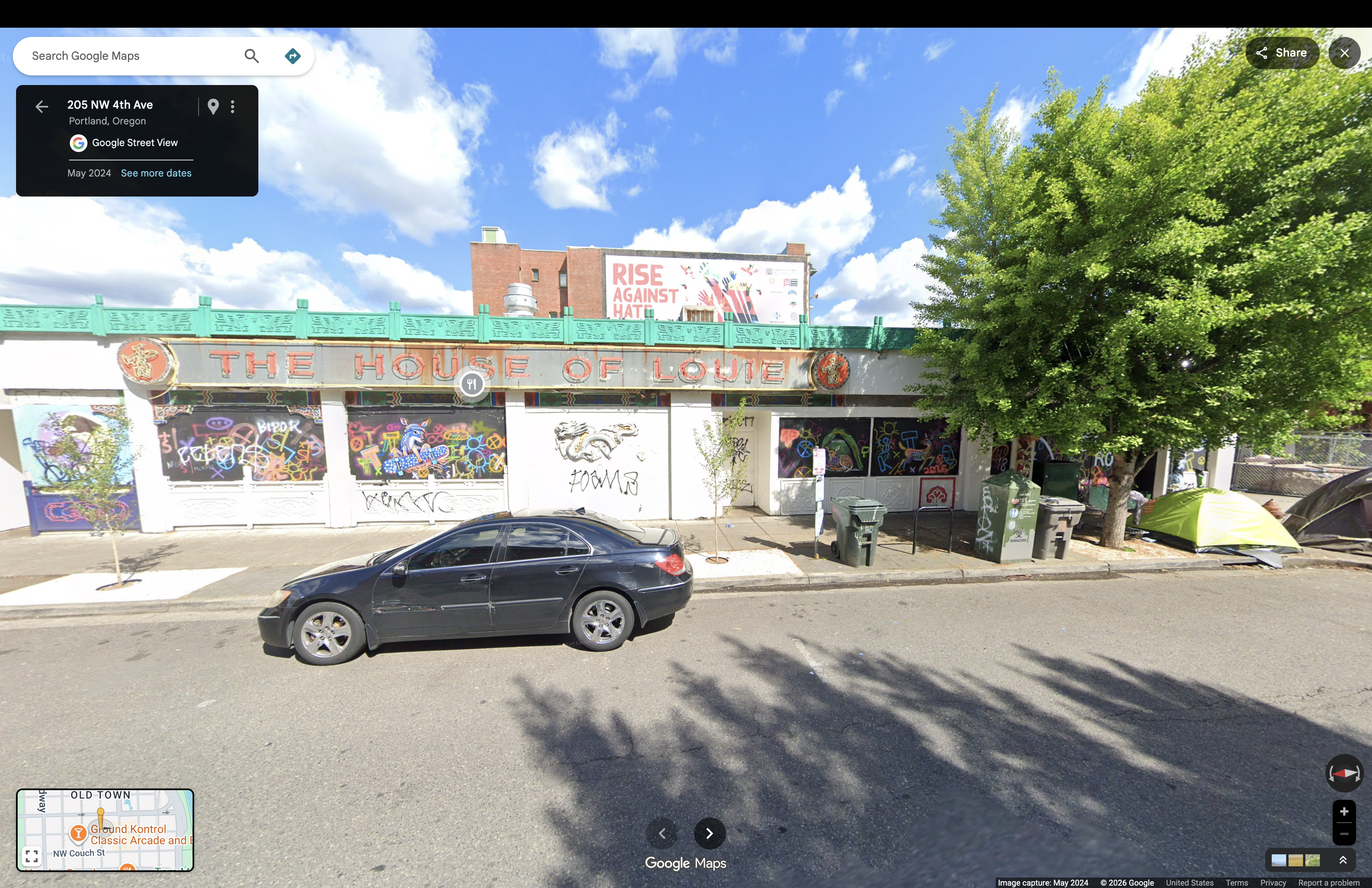
COVID wasn’t the cause of the “homelessness epidemic”. Nor was Fentanyl. Many Portlanders will remember long-standing pride in our “urban growth boundary” which kept our downtown lively and safe. Unfortunately, as property values went up, we refused to provide affordable housing for those who were being pushed out(doors) by rising rent. We blighted our city after all.
Being cheap with humans isn’t free.
Institutions like R2DToo carved a little world in the cliffs of “property value.” Not just to survive, but 2 dream too.